When You Fight With Your Partner, Why Does Sleep Go Away?
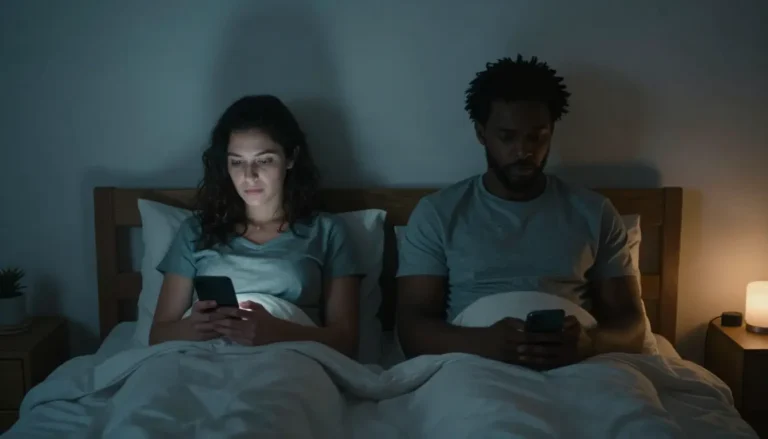
Tell the truth… during the day, we fight. A little anger, a little ego, a little silence. At that time, it feels manageable. But as soon as night falls, the lights are turned off, you put the phone aside, and the room becomes quiet, everything starts coming back to the surface. Your mind becomes extremely active: “Why did he say that?” “Did I overreact?” “How will the conversation start tomorrow?” The body is physically tired, but the mind is running at full speed. Sleep simply does not come.
This isn’t just overthinking. When tension arises in a relationship, the brain doesn’t treat it as a normal disagreement. The bond with a partner is a source of emotional safety, and when there’s disturbance, the brain perceives it as a threat. For our nervous system, connection equals safety. As soon as a fight happens, the body goes into “alert mode”—stress hormones are released, heart rate increases, and thoughts loop endlessly. The survival system turns on, while the sleep system shuts down automatically.
At night, with fewer distractions, feelings seem louder. During the day, we stay busy, but at night, it’s just you and your thoughts. That’s why sleep disturbance after fighting with a partner is so common—the mind cannot relax until emotional safety is restored.
Why Fighting With a Partner Feels So Heavy
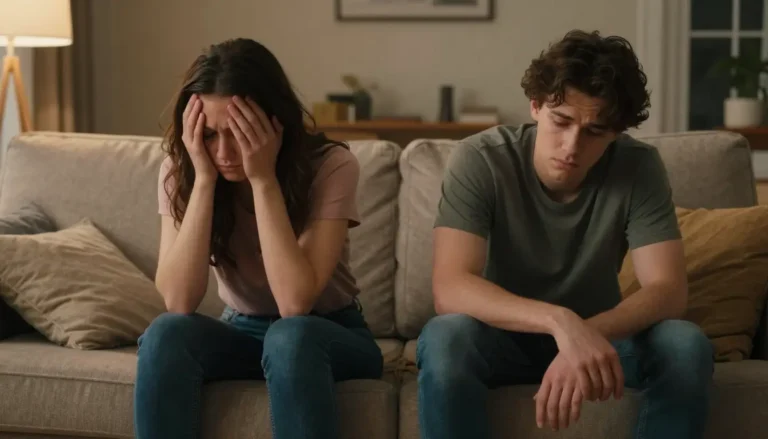
We argue with many people—at work, with friends, or with family—but fights with a partner feel different. It’s never just about the issue. There’s attachment, emotional investment, and fear: “What if they move away?” There’s also the expectation: “They should understand me without too much explanation.”
When these expectations are hurt, the brain treats it as an emotional threat. The body activates survival mode—overthinking begins, the heart feels heavy, and sleep is disturbed. Fighting with a partner is not just a clash of words; it’s a fear of losing the connection.
Why Your Mind Turns Into a Courtroom at Bedtime
Have you noticed that as soon as you lie down, the argument starts replaying? Every line is rewound, your mind sets up its own courtroom. You imagine better replies, justify yourself, blame yourself. This mental replay is overthinking, which keeps the brain alert.
Sleep requires a calm, safe brain. If the brain is busy preparing future arguments or collecting evidence from past ones, the body cannot relax. Sometimes there is no loud fight—just silent treatment. Outwardly calm, but inwardly noisy. Silence creates uncertainty, which disturbs the brain the most. Constant mental guessing like “What is he thinking?” or “Is the relationship okay?” prevents closure and deep sleep.
What Happens in the Body After a Fight
Partner fight sleep problems aren’t just mental—they are physical too. After a fight, your heart beats faster, muscles feel tight, and your jaw and shoulders stiffen. The brain activates “fight-or-flight” mode, keeping the body alert.
Sleep is the opposite of this mode. Deep sleep only comes when the brain receives a safety signal: “Everything is safe, you can relax.” Until that signal is felt emotionally and physically, deep sleep remains difficult. Delayed sleep after a fight is a natural protective response, not weakness.
How to Know if Sleep Is Disturbed by Relationship Stress
Ask yourself these three questions:
Does sleep get disturbed only after a fight?
Does sleep naturally improve on happy, tension-free days?
Does the argument replay in your mind at bedtime?
If the answer is yes, this isn’t a sleep disorder—it’s emotional overload. Your brain and body are still processing unresolved feelings, which naturally delays sleep.
Practical Steps to Sleep Better After a Fight
1. Avoid Late Night Resolution
At 11 p.m., the brain is already tired, and discussions usually escalate. Instead, say:
“Let’s talk about this calmly tomorrow.”
A simple boundary prevents unnecessary stress.
2. Calm Your Body, Mind Will Follow
Try breathing exercises: inhale for 4 seconds, exhale for 6 seconds, for 5 minutes. This sends a safety signal to the nervous system, gradually relaxing the mind and body, making sleep easier.
3. Write Down Your Feelings, Not Replies
Avoid texting your partner late at night—it can escalate arguments. Instead, write in a notebook or journal. Expressing emotions on paper lightens the mind and signals the brain to rest.
Final Thought – Emotional Safety = Better Sleep
A healthy relationship is not just about love or romance; emotional safety is key. When you feel safe with your partner, your body relaxes, and sleep naturally follows.
Often, the problem isn’t the mattress or room—it’s unresolved emotions looping in the mind. Emotional safety signals both mind and body to enter rest mode, enabling deep, peaceful sleep.
Frequently Asked Questions
Why do fights with a partner affect sleep so much?
Fights with a partner trigger emotional stress and activate the body’s fight-or-flight response. This keeps your mind alert and body tense, making it hard to fall asleep until you feel emotionally safe again.
Is it normal to overthink arguments at night?
Yes, it’s normal. At night, distractions are minimal, so your brain replays the argument and creates “mental courtrooms,” which is a natural part of processing emotional stress.
How long does it take to sleep after a partner fight?
It varies, but generally, sleep is delayed until the nervous system receives a safety signal. Practicing calming techniques like deep breathing or journaling can help you relax faster.
Can relationship stress cause physical symptoms?
Absolutely. After an argument, your heart may race, muscles tighten, and shoulders or jaw stiffen. These physical signs are part of the fight-or-flight response and can interfere with sleep.
What are practical steps to sleep better after a fight?
- Avoid late-night resolution—agree to discuss calmly the next day.
- Calm your body with deep breathing (inhale 4s, exhale 6s, 5 mins).
- Write down feelings in a notebook instead of texting your partner.
How can I tell if my sleep problem is due to relationship stress?
Ask yourself:
- Does sleep get disturbed only after fights?
- Is sleep better on happy, tension-free days?
- Do arguments replay in your mind at bedtime?
If yes, it’s likely emotional overload, not a sleep disorder.