How Diet Affects Sleep Connection Explained for Better Rest & Recovery

Sleep is more than just closing your eyes at night. It’s the foundation of mental clarity, hormone balance, muscle recovery, memory, mood, and even survival. Yet, millions from the United States, the United Kingdom, and around the world struggle to sleep well — and surprisingly, their diet plays a major role.
In this article, we’ll break down the full picture: how diet affects sleep but especially how sleep works and why your body responds the way it does .
Why Sleep Matters More Than We Think

Before we jump into nutrition, we need to understand what we’re affecting.
Good sleep affects:
-
Brain performance
-
Metabolism
-
Emotional regulation
-
Immune function
-
Physical recovery
-
Hormone balance
-
Long-term health
People who sleep 7–9 hours report sharper memory, less irritability, more motivation, and better overall health. On the other hand, sleep deprivation creates a chain reaction inside the body — directly influencing hunger, cravings, and poor food decisions.
Sleep Physiology in Simple Language
While you sleep:
-
Your brain clears waste proteins
-
Your muscles repair micro-tears
-
Your immune system strengthens
-
Your hormones rebalance
-
Your nervous system resets
Sleep works as a complete “system reboot” — without it, you operate on outdated software.
Sleep Stages Briefly Explained

There are four main stages:
-
NREM (Stage 1) – light sleep
-
NREM (Stage 2) – deeper sleep
-
NREM (Stage 3) – deep restorative sleep
-
REM Sleep – dreaming, memory processing, emotional regulation
If your sleep is interrupted due to poor digestion, late-night meals, caffeine, or alcohol, your brain never enters full repair mode.
The Real Connection Between Sleep & Diet
Here’s the core concept: how diet affects sleep connection explained.
The relationship is two-way:
-
What you eat influences how you sleep
-
How you sleep influences what and how you eat
So first, let’s focus on the diet → sleep pathway.
How Diet Affects Sleep Quality
There are three primary ways diet impacts sleep:
1) Diet Influences Sleep Hormones
Sleep is controlled by hormones such as:
-
Melatonin (sleep hormone)
-
Serotonin (mood & melatonin precursor)
-
Cortisol (stress hormone)
-
Insulin (blood sugar regulation)
-
Ghrelin & Leptin (hunger hormones)
Certain foods help create a healthy sleep environment, while others disrupt these hormones.

Foods that support sleep:
-
Cherries
-
Bananas
-
Almonds & walnuts
-
Dairy products
-
Oats
Foods that disrupt sleep:
-
High-sugar foods
-
Spicy meals
-
Fried foods
-
Processed snacks
-
Caffeine & alcohol (late at night)
Eating the wrong foods before bedtime means your hormones are working against sleep instead of supporting it.
2) Diet Affects Digestion & Night Comfort
Late heavy meals force your digestive system to stay active while your brain tries to rest. This creates:
-
Acid reflux
-
Gas
-
Bloating
-
Stomach heaviness
This is a major reason sleep experts recommend finishing dinner 2–3 hours before sleep.
3) Nutrient Deficiencies That Disturb Sleep
Many people in the US & UK experience deficiencies in:
-
Magnesium
-
Vitamin D
-
Omega-3
-
Vitamin B6
-
Tryptophan

These nutrients help with sleep regulation. Without them, sleep becomes light, restless, or fragmented.
Examples:
-
Magnesium relaxes muscles and reduces stress
-
Vitamin D helps regulate circadian rhythm
-
Omega-3 supports REM sleep and brain recovery
How Sleep Affects Diet Choices (Reverse Side of the Connection)
Now let’s flip the connection.
When you sleep poorly:
-
Ghrelin (hunger hormone) increases
-
Leptin (fullness hormone) decreases
This means you feel hungrier, eat more, and especially crave junk foods.
People who sleep less than 6 hours often:
-
Overeat calories
-
Choose sugary salty foods
-
Consume snacks late at night
This creates a harmful cycle:
Poor sleep → bad diet → worse sleep
Caffeine, Alcohol & Late-Night Eating: Silent Sleep Killers
If you live in the US/UK, you’re surrounded by:
-
Coffee shops
-
Energy drinks
-
Social drinking culture
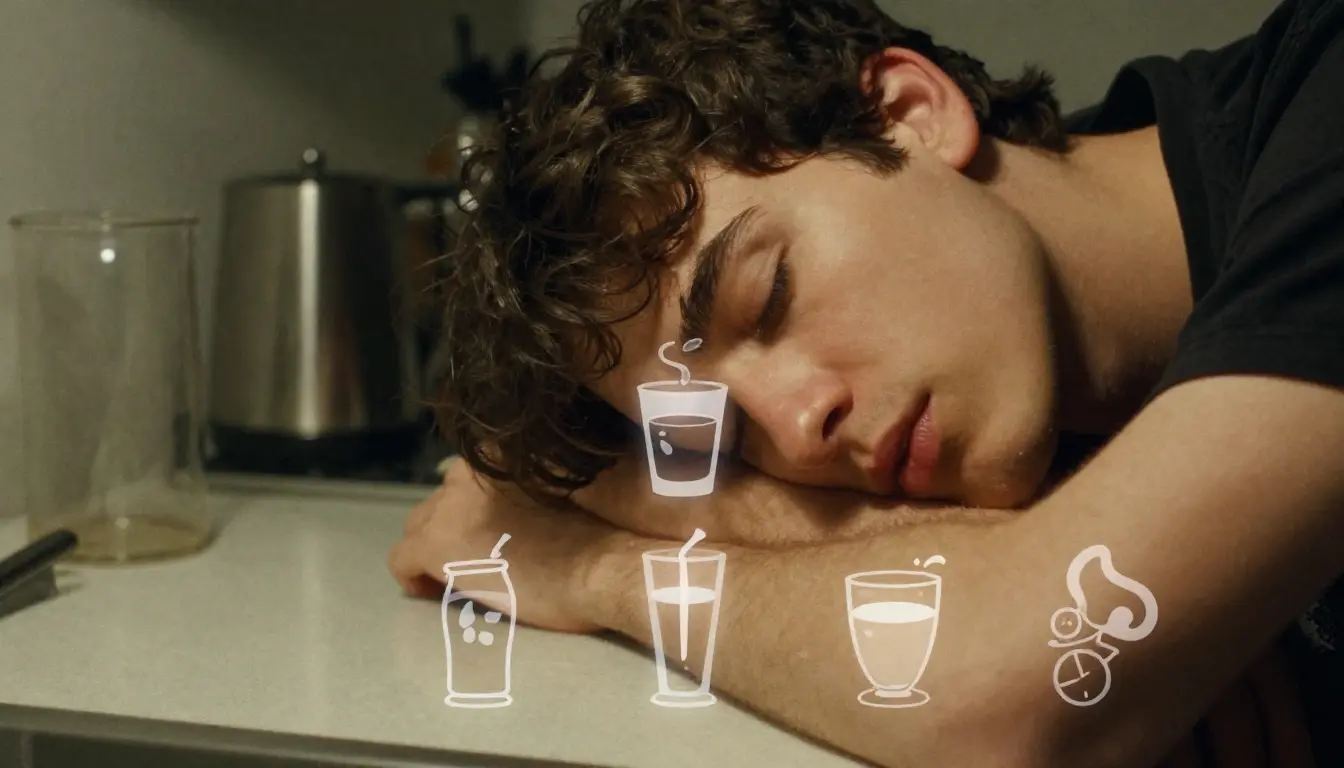
Caffeine
Blocks sleep chemicals (adenosine) and stays in the system for 6–10 hours. Drinking coffee at 4 PM can affect sleep at midnight.
Alcohol
Helps you fall asleep faster but disrupts REM sleep and causes night awakenings.
Late-Night Meals
Cause digestive discomfort and delay deep sleep stages.
Best Diet Strategies for Better Sleep
Here are practical, evidence-based steps:
1. Eat dinner early
Finish eating at least 2–3 hours before bed.
2. Choose sleep-friendly foods
Great options include:
-
Banana + warm milk
-
Oatmeal + nuts
-
Yogurt + berries
-
Turkey sandwich
-
Chamomile or valerian tea
3. Avoid sugar at night
Sugar spikes energy, then crashes mood, damaging sleep cycles.
4. Limit caffeine after 2 PM
This helps the body prepare for night rest.
5. Reduce alcohol near bedtime
If consuming, hydrate and avoid mixing with late meals.
6. Maintain consistent eating times
Your digestive clock affects your sleep clock.

Conclusion: The Sleep & Diet Connection Explained Clearly
To summarize the entire how diet affects sleep connection explained concept:
-
Diet influences sleep hormones, digestion, and nighttime comfort
-
Sleep influences cravings, metabolism, and calorie choices
-
Poor sleep + poor diet reinforce each other
-
Good sleep + balanced diet support each other
If you’re trying to fix your health, you cannot ignore nutrition. And if you’re trying to fix your nutrition, you cannot ignore sleep.
They are not separate systems — they are partners in long-term wellness.