Best sleep habits for long term health play a crucial role..
Best sleep habits for long term health play a crucial role in overall well-being. Developing healthy sleep habits not only improves daily energy levels but also supports physical and mental health over time According to sleep researchers, consistently following healthy sleep habits can significantly reduce the risk of chronic diseases and increase lifespan.
In this article, we’ll explore science-backed sleep habits, expert insights, and why these habits work for long-term health.

Why Sleep Is Essential for Long-Term Health
Research shows that sleep is not just rest—it’s a biological necessity that supports multiple body systems. Adults who consistently sleep 7–9 hours per night have been linked with better overall health, This clearly highlights the importance of sleep for health, as proper rest supports heart function, immunity, metabolism, and brain performance.
Here’s what major health studies and organizations say:
🔹 Heart & Cardiovascular Health: Sleeping 7–9 hours per night is tied to a lower risk of cardiovascular diseases such as coronary heart disease, stroke, and high blood pressure. Insufficient sleep has been linked to increased risk of heart conditions and mortality.
🔹 Metabolism & Weight Control: People who sleep less than the recommended amount are more likely to experience weight gain and obesity, partly because sleep affects hormones that control hunger and appetite.
🔹 Immune System: Quality sleep supports a healthy immune response. Without adequate rest, the body’s ability to fight infections and regulate inflammation decreases.
🔹 Cognitive Function & Mental Health: Poor sleep is linked to impaired thinking, memory problems, mood disorders (like anxiety and depression), and decreased concentration.
Chronic Disease Link: Research has consistently found that chronically low sleep duration is associated with a higher risk of long-term conditions including diabetes, obesity, impaired glucose tolerance, and weakened immune functioning

Key Effects of Sleep on the Body
These findings explain the long-term health benefits of sleep, including reduced risk of chronic diseases and improved emotional balance.
Heart health and blood pressure regulation
Brain performance and memory consolidation
Hormonal balance (hunger, stress, growth)
Mental health and emotional regulation
Immune system strength
And importantly:
Poor sleep habits over time are linked to obesity, diabetes, depression, and cardiovascular diseases, according to large population-based studies
Create a Healthy Bedtime Routine
Creating a consistent bedtime routine is a proven sleep routine for better health, helping regulate circadian rhythm and improve sleep quality
Healthy bedtime habits include:
Reading a book – Helps the mind relax and signals winding down.
- Light stretching – Reduces muscle tension and lowers cortisol levels.
- Meditation or deep breathing – Promotes relaxation and prepares the brain for sleep.
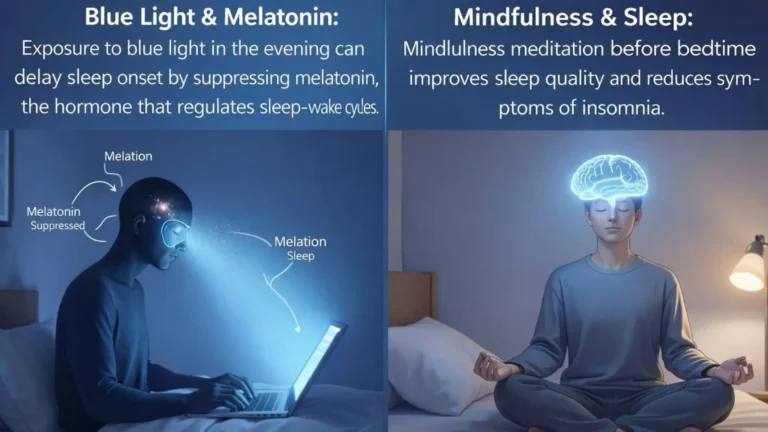
- Avoiding screens 1 hour before bed – Blue light from phones, tablets, and TVs suppresses melatonin, making it harder to fall asleep
From the point of Research Base:
Blue Light & Melatonin: Exposure to blue light in the evening can delay sleep onset by suppressing melatonin, the hormone that regulates sleep-wake cycles.
Mindfulness & Sleep: Mindfulness meditation before bedtime improves sleep quality and reduces symptoms of insomnia.
Why it works:
Creating a consistent pre-sleep routine trains your brain to recognize cues that it’s time to sleep. Over time, this improves sleep onset latency, enhances deep sleep, and supports long-term health outcomes like better immunity, mental clarity, and cardiovascular protection
Optimize Your Sleep Environment
Your bedroom directly impacts your sleep quality. According to the Sleep Foundation, a sleep‑friendly environment — including darkness, quiet, cool temperature, and a comfortable bed — helps your body fall asleep faster and stay asleep longer, supporting restorative deep sleep that’s crucial for long‑term health
Best practices:
Keep the room dark — Darkness promotes melatonin production, which helps maintain sleep cycles.
Keep noise to a minimum — Reducing external sound supports uninterrupted sleep.
Maintain a cool temperature (about 65–68°F / 18–20°C) — Cooler rooms are associated with easier sleep onset and better sleep quality.
Use a comfortable mattress and pillow — Proper comfort helps prevent sleep disruptions and body aches.
Why it works:
The Sleep Foundation explains that minimizing light and noise and keeping a cool, calm bedroom reinforces your circadian rhythm and supports the deeper phases of sleep, which are essential for physical repair, hormone balance, and long‑term health

Limit Caffeine and Alcohol Intake
One of the best sleep habits for long term health is to limit caffeine and alcohol, especially in the hours leading up to bedtime. Both substances can interfere with your sleep architecture and disrupt the natural progression through sleep stages, including REM sleep, which is crucial for memory, emotional regulation, and brain detoxification
Caffeine reduces total sleep time and sleep quality, and it increases the time it takes to fall asleep when consumed before bedtime.
One sleep study found that to avoid reductions in total sleep time, caffeine should ideally be consumed at least ~8.8 hours before bedtime, or even earlier depending on dose and sensitivity.
Why this matters:
REM sleep is essential for memory, emotional regulation, and brain detoxification. Limiting caffeine after afternoon hours is one of the best sleep habits for long term health.
Prioritize Physical Activity
Regular exercise improves sleep quality and duration — and this is backed by health authorities like the Centers for Disease Control and Prevention (CDC) and sleep research organizations
According to the CDC, physical activity is one of the immediate benefits for adults, and one of the main benefits listed is that exercise improves sleep quality. The CDC notes that a single session of moderate‑to‑vigorous physical activity can help enhance how well you sleep
These recommendations are especially important as effective sleep habits for adults, since lifestyle choices directly affect sleep quality with age.
How Good Sleep Habits Improve Long-Term Health
Here is the best sleep habits for long term health leads to:
Stronger immune response
Reduced risk of heart disease
Better brain memory and focus
Balanced metabolism and weight control
Lower anxiety and depression levels
Long-term studies show that people with consistent sleep routines live healthier and longer lives
Frequently Asked Questions (FAQ)
Q1. What are the best sleep habits for long term health?
Maintaining a consistent sleep schedule, reducing screen time, managing stress, and creating a sleep-friendly environment are the best sleep habits for long term health.
Q2. How many hours of sleep are ideal for adults?
Most experts recommend 7–9 hours of quality sleep per night for optimal long-term health.
Q3. Can poor sleep habits cause chronic diseases?
Yes. Long-term poor sleep habits are linked to heart disease, diabetes, obesity, and mental health disorders.
Q4. Does sleep quality matter more than sleep duration?
Both are important, but high-quality sleep allows the body to repair and regenerate effectively.
Q5. How long does it take to improve sleep habits?
Consistent effort for 2–4 weeks can significantly improve sleep quality and health outcomes.