Brain During Sleep Explained: What Happens to Your Brain During Sleep?
Brain during sleep explained — if you’ve ever wondered what your mind is actually doing while you’re knocked out at night, you’re not alone. A lot of people think sleep is just “shutting down.” In reality, your brain is incredibly active. It reorganizes memories, clears toxins, balances hormones, and even rewires itself.
Here we will guide you exactly what happens to your brain during sleep — backed by real neuroscience research and expert findings.
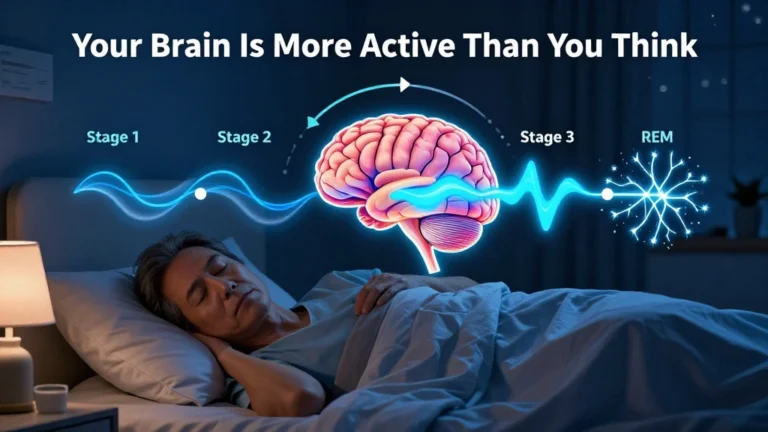
Your Brain Is More Active Than You Think
When you fall asleep, your body begins to rest — your muscles relax, your breathing slows, and your heart rate decreases. But your brain does not power down. Instead, it shifts into a highly organized and carefully timed pattern of activity called sleep cycles.
According to the National Institute of Neurological Disorders and Stroke, sleep is not random. It happens in repeating cycles that last about 90 minutes each. During a full night’s sleep, your brain typically goes through four to six of these cycles.
Each cycle is made up of different stages, and every stage has a specific purpose — from physical repair and energy restoration to memory processing and emotional regulation. Rather than being inactive, your brain is actively coordinating these processes to reset and prepare your body and mind for the next day.
In simple terms, sleep is a structured biological program — not a shutdown, but a scheduled system of restoration.
Stages:
- Stage 1 (light sleep)
- Stage 2 (deeper relaxation)
- Stage 3 (deep sleep / slow-wave sleep)
- REM sleep (rapid eye movement)
Each stage serves a different neurological purpose.
Deep Sleep: Brain Repair Mode
During deep sleep (Stage 3), your brain produces slow delta waves. This is when physical and neurological repair happens.
What Happens in Deep Sleep?
- Damaged cells repair
- Growth hormone is released
- Energy stores are restored
- Immune function strengthens
But here’s the most fascinating part…
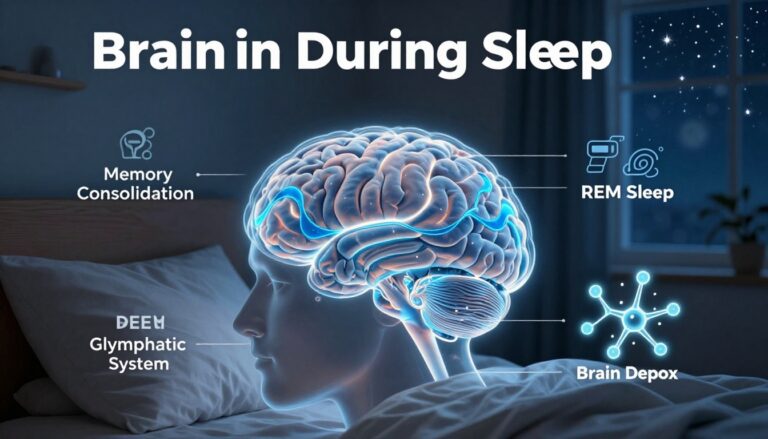
The Brain Cleans Itself
In 2013, researchers from the University of Rochester Medical Center discovered the brain’s “glymphatic system.” During deep sleep, cerebrospinal fluid flushes through the brain, clearing out waste proteins like beta-amyloid — the same protein linked to Alzheimer’s disease.
That means poor sleep literally prevents your brain from detoxing properly.
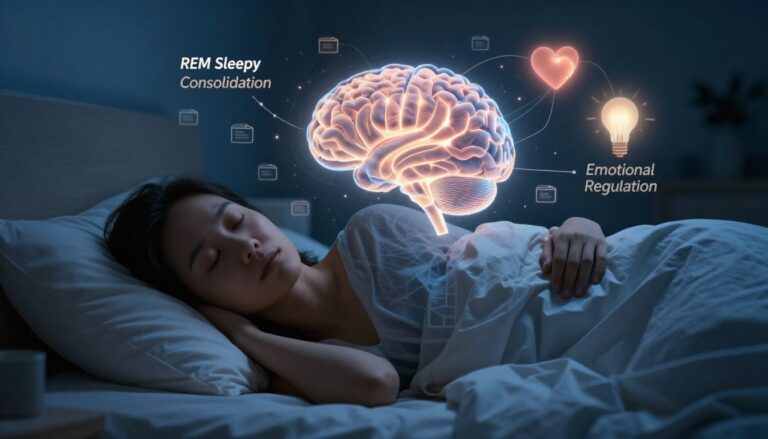
REM Sleep: Memory & Emotional Processing
REM sleep is when most dreaming occurs. Brain activity during REM can look almost identical to being awake.
According to sleep researchers at Harvard Medical School, REM sleep plays a key role in:
- Emotional regulation
- Creativity
- Long-term memory consolidation
- Problem-solving skills
Memory Gets Reorganized
Throughout the day, your brain collects information. During sleep — especially REM — it decides:
- What to keep
- What to delete
- What to store long-term
This process is called memory consolidation. Without enough REM sleep, your learning ability drops significantly.
Your Brain Shrinks Slightly at Night
Yes, really .Here’s something wild. Brain cells actually shrink up to 60% during deep sleep. This creates more space between neurons, allowing the glymphatic system to wash out toxins more efficiently.
So technically… your brain becomes more “open” while you sleep.
That’s why chronic sleep deprivation is linked to:
- Brain fog
- Mood swings
- Anxiety
- Cognitive decline
Sleep Cycles and Brain Waves
Your brain does not switch off when you fall asleep. Instead of shutting down, it stays active and moves through a series of organized stages called sleep cycles. Each stage has its own unique pattern of brain activity, known as brain waves.
Throughout the night, your sleep follows a repeating cycle, and in each phase, your brain produces different types of electrical signals. Some stages have slower, deeper brain waves that help the body rest and repair. Other stages have faster, more active brain waves that support dreaming, memory, and learning.
So, sleep is not a blank or inactive state — it is a carefully structured process where your brain changes its activity level and pattern to support different functions.
Light Sleep :
This is the transition stage. Your body relaxes, breathing slows, and you can wake up easily.Deep Sleep :
This is the recovery stage. Your body repairs itself, restores energy, and strengthens the immune system. It’s harder to wake up during this stage.REM Sleep :
This is when most dreaming happens. Your brain becomes highly active, helping with memory, learning, and emotional processing.
Most sleep trackers estimate these stages using movement and heart rate, while clinical tests like EEG directly measure brain activity for accurate results.In simple terms, sleep is your brain and body’s built-in repair system.
What Happens If You Don’t Sleep?
The brain suffers fast when sleep is restricted.
Research from the Centers for Disease Control and Prevention shows that adults who sleep less than 7 hours per night are at higher risk for:
- Depression
- Heart disease
- Stroke
- Obesity
- Cognitive decline
Short-term effects include:
- Slower reaction time
- Poor decision-making
- Increased stress hormones
- Reduced attention span
In extreme cases, prolonged sleep deprivation can cause hallucinations.
How to Optimize Brain Function During Sleep
If you want better cognitive performance, focus on sleep quality — not just duration.
1. Keep Your Bedroom Cool
The ideal sleep temperature is 65–72°F.
2. Avoid Blue Light Before Bed
Blue light suppresses melatonin production.
3. Consider Natural Sleep Support
Many Americans struggle with falling asleep because of stress and screen exposure. A science-backed herbal blend containing:
- Magnesium glycinate
- L-theanine
- Chamomile extract
- Valerian root
can help improve deep sleep cycles naturally.
Look for supplements that are third-party tested and manufactured in GMP-certified facilities for safety.
(Always consult your healthcare provider before starting supplements.)
Brain During Sleep Explained: The Big Picture
To summarize the brain during sleep explained clearly:
While you’re asleep, your brain is:
✔ Detoxing harmful waste
✔ Repairing neural connections
✔ Storing memories
✔ Regulating emotions
✔ Boosting immune health
✔ Strengthening learning capacity
Sleep isn’t passive. It’s one of the most neurologically active states your brain enters every day.
And skipping it? That’s like skipping maintenance on a high-performance machine.
Final Thoughts
If you want sharper focus, better memory, improved mood, and long-term brain health — prioritize sleep like it’s non-negotiable.
The science is clear. Your brain depends on it.
When people ask, “What happens to your brain during sleep?” — the real answer is: everything that keeps you mentally strong happens there.
FAQ Section
1. What happens to your brain during sleep?
The brain during sleep explained simply means your brain does not shut off — it becomes highly active. During deep sleep, it repairs cells and removes toxins. During REM sleep, it processes memories, emotions, and learning. Sleep is essential for brain detox and cognitive performance.
2. Why is REM sleep important for brain health?
REM sleep is critical because it helps consolidate memories and regulate emotions. Studies from the Harvard Medical School show REM sleep supports learning, creativity, and mental stability.
3. Does the brain clean itself during sleep?
Yes. Research from the University of Rochester Medical Center discovered the glymphatic system, which flushes out waste proteins from the brain during deep sleep.
4. What happens to your brain if you don’t get enough sleep?
Without proper sleep, the brain cannot detox or consolidate memory properly. According to the Centers for Disease Control and Prevention, chronic sleep deprivation increases risk of depression, heart disease, and cognitive decline.
5. How many hours of sleep does the brain need?
Most adults need 7–9 hours per night for optimal brain function. Deep sleep and REM cycles are both necessary for full neurological recovery.
6. Is deep sleep more important than REM sleep?
Both are important. Deep sleep focuses on physical and brain detox repair, while REM sleep focuses on memory and emotional processing.