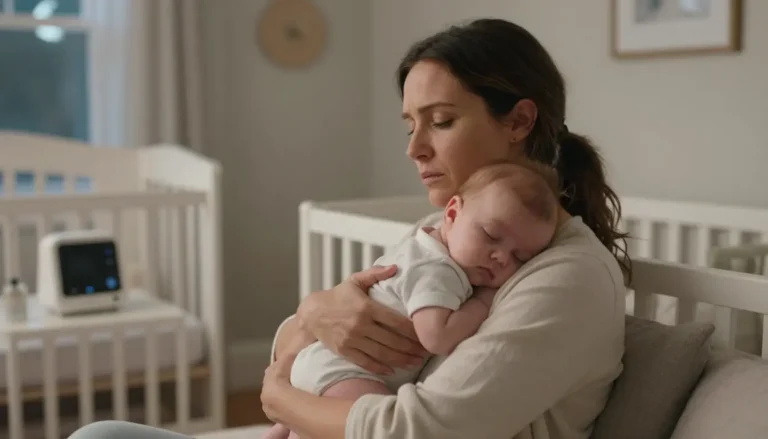
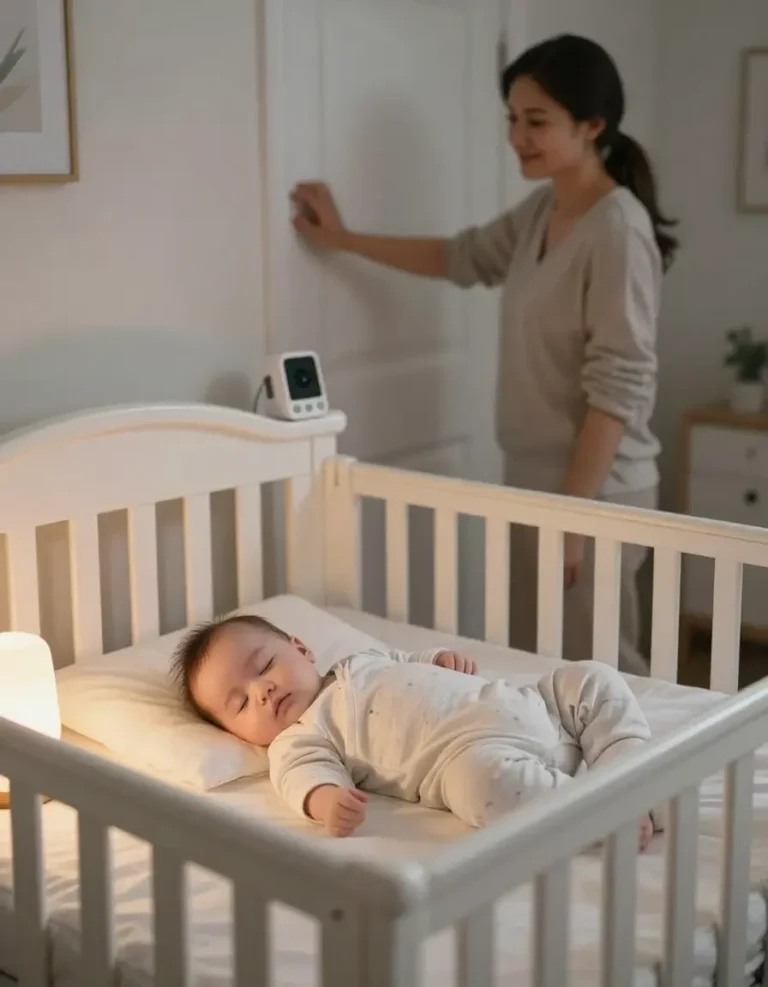
Baby Sleep Schedule Month-by-Month: What Actually Happens in the First Year?
If you’re searching for a real-world Baby Sleep Schedule Month-by-Month guide, chances are you’re either exhausted… confused… or both.
Here’s the honest truth most blogs won’t tell you: baby sleep is not linear. It improves, then falls apart, then improves again. And most of that is completely normal.
The American Academy of Pediatrics explains that infant sleep development is directly connected to neurological growth. That means when your baby’s sleep suddenly changes, it’s often because their brain is leveling up.
Let’s walk through the first year in a way that actually makes sense.
0–1 Month: The “Why Is My Baby Awake Again?” Phase
In the first month, there is no real schedule — and that’s biologically appropriate.
Newborns typically sleep 14–17 hours a day, but it’s broken into tiny chunks. Two hours here. Three hours there. Then they’re awake again.
Why?
Because their circadian rhythm hasn’t developed yet. According to research supported by the National Sleep Foundation, newborns don’t produce consistent melatonin patterns in the early weeks. Their bodies simply don’t understand night versus day.
You’ll notice feeds drive everything. Sleep happens after feeding. Then hunger wakes them up again.
Instead of trying to force a schedule, focus on:
- Feeding on demand
- Keeping nights dark and calm
- Letting daylight into the house during the day
This stage isn’t about training. It’s about survival and bonding.
2–3 Months: The First Glimpse of Structure
Somewhere around 8–10 weeks, you might notice something magical: one slightly longer stretch of sleep at night.
This is when your baby’s internal clock begins forming. Their body slowly starts recognizing patterns — morning light, evening darkness, bath time, feeding cues.
You’re not imagining it.
Studies referenced by the Centers for Disease Control and Prevention show that consistent bedtime routines improve sleep onset, even in very young infants.
This is a great time to introduce a predictable rhythm. Not a strict schedule — just a flow.
A simple routine like:
Bath → Feed → Quiet cuddle → Crib
repeated nightly can become a powerful sleep cue.
White noise also becomes incredibly helpful here.
One product many American parents swear by is the Hatch Rest Baby Sound Machine. It creates steady background sound that mimics the womb environment. Clinical sleep research has shown white noise can help infants fall asleep faster and reduce sudden awakenings when used at safe volumes.
Parents like it because it grows with the child — eventually becoming a toddler “okay-to-wake” clock. That makes it more than just another baby gadget.
4 Months: The Sleep Regression That Isn’t Really a Regression
If your baby was sleeping well and suddenly isn’t… welcome to four months.
This phase frustrates many parents because it feels like progress disappears overnight. But what’s actually happening is a developmental milestone.
Around four months, babies’ sleep cycles mature and begin resembling adult sleep architecture. The lighter sleep stages become more noticeable. That means your baby now partially wakes between cycles — just like you do — but doesn’t yet know how to fall back asleep independently.
Research from Harvard Medical School explains that this shift is neurological, not behavioral.
So what helps? Consistency. Calmness. Predictability.
This is when putting baby down drowsy but awake becomes important. It gently teaches them how to connect sleep cycles without fully relying on feeding or rocking every time.
5–6 Months: The Sweet Spot for Routine
By five or six months, many babies are capable of longer nighttime stretches. Some may sleep 6–8 hours straight. Others still wake once or twice — both can be normal.
What changes now is predictability.
You’ll likely see:
A more consistent morning wake time
Two to three solid naps
Earlier bedtime (often around 7 PM)
Pediatric sleep studies show babies at this age respond very well to structured bedtime routines. The repetition builds a strong sleep association in the brain.
If sleep has been chaotic, this is often the age where families regain control
7–9 Months: Big Brain, Busy Body
This stage is fascinating — and exhausting.
Your baby is crawling, maybe pulling up, maybe babbling nonstop. Their cognitive development is exploding.
With that growth comes something new: separation anxiety.
Suddenly, your baby realizes you exist even when you leave the room. And they may strongly protest bedtime.
This doesn’t mean your schedule is wrong. It means attachment is developing in a healthy way.
The key here is balance:
Offer reassurance. Keep bedtime calm. Avoid adding new habits you don’t want long term.
Consistency during this phase prevents long-term sleep struggles.
10–12 Months: Transition Toward Toddler Sleep
By the end of the first year, many babies sleep 10–12 hours at night with one or two naps during the day.
Some transition from two naps to one closer to 12 months. Others need two naps until 14–15 months.
The most important factor now isn’t total hours — it’s sleep quality.
Following safe sleep guidance from the American Academy of Pediatrics remains critical: firm mattress, no loose blankets, and a clutter-free crib.
At this stage, sleep becomes more stable — but developmental leaps can still cause temporary disruptions. But honestly that’s normal
Why a Baby Sleep Schedule Month-by-Month Approach Works
A Baby Sleep Schedule Month-by-Month strategy works because it respects biology.
You’re not forcing a newborn into a strict routine.
You’re not panicking at four months.
You’re not assuming something is wrong at eight months.
You’re adapting.
Research consistently shows that consistent bedtime routines improve:
- Sleep duration
- Emotional regulation
- Parental stress levels
Sleep isn’t just rest. It supports brain development, memory formation, and mood stability.
Final Thoughts for Tired Parents
If you remember one thing from this Baby Sleep Schedule Month-by-Month guide, let it be this:
Sleep development is a process, not a performance.
There will be good weeks and hard weeks.
There will be regressions.
There will be growth spurts.
Stay consistent. Keep bedtime calm. Use supportive tools when needed. And trust that your baby’s sleep is evolving exactly as it should.
And yes — eventually — you will sleep again too.
FAQ Section
Q1 .How many hours should a baby sleep in the first year?
Answer: In the first year, babies typically sleep between 12 to 17 hours in a 24-hour period, depending on age. Newborns sleep more frequently in short stretches, while older babies gradually sleep longer at night with 1–2 naps during the day. Following a consistent Baby Sleep Schedule Month-by-Month helps parents understand what’s developmentally normal.
Q 2. When do babies start sleeping through the night?
Answer: Many babies begin sleeping longer stretches between 4 to 6 months, but “sleeping through the night” can mean different things. Some babies still wake once for feeding. Every baby develops at their own pace.
Q 3. Is a strict sleep schedule necessary for babies?
Answer: A strict schedule is not necessary in the newborn phase. However, around 3–4 months, a predictable routine becomes helpful. A flexible Baby Sleep Schedule Month-by-Month approach works better than rigid timing.
Q 4. What causes the 4-month sleep regression?
Answer: The 4-month sleep regression happens because babies’ sleep cycles mature and become more like adult sleep cycles. They begin waking between cycles and may need help learning how to fall back asleep independently.
Q 5. Are white noise machines safe for babies?
Answer: Yes, white noise machines are generally safe when used at a low volume (below 50 decibels). Many pediatric sleep experts recommend them to create a calming sleep environment.